

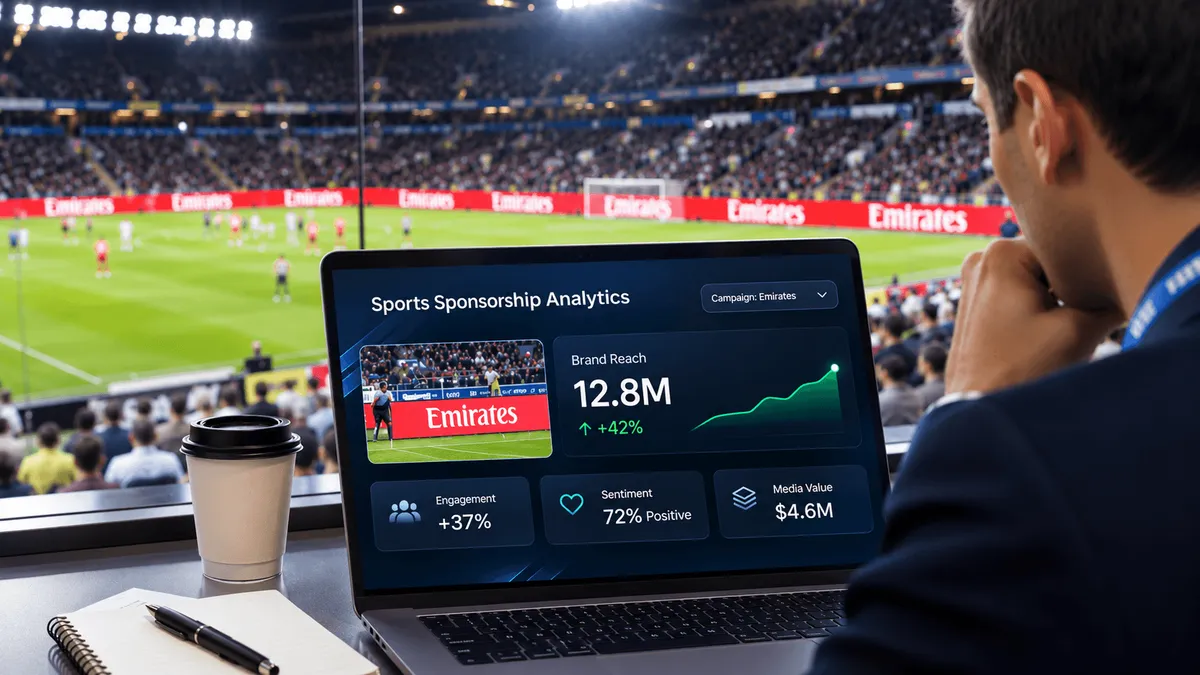
How Could AI Change Sports Sponsorship Measurement in 2027?
By Khuzaima Yamman
Nov 24 2026, 5 min read
Artificial intelligence is changing how brands measure the commercial value of partnerships with sports teams, leagues, athletes and major events.
For years, sponsorship reports have focused on television exposure, audience reach, media value and brand awareness. AI is helping marketing teams analyse these indicators more efficiently while connecting information from broadcasts, digital platforms and fan engagement.
By 2027, AI-powered measurement could become increasingly important for brands evaluating major sponsorship investments. The opportunity is to understand which assets deliver meaningful exposure, how audiences respond and where marketing budgets generate measurable results.
Why Is Sports Sponsorship Measurement Changing using AI?
Global investment in sports partnerships continues to grow, increasing pressure on marketing leaders to demonstrate commercial value.
According to the European Sponsorship Association, Europe's sponsorship market reached €34.45 billion in 2025, with sport accounting for €24.79 billion, or 72% of total investment.
As budgets increase, CMOs and financial decision-makers need reliable evidence to assess performance.
Traditional reporting can identify television audiences, logo appearances and campaign engagement. However, combining these measurements across different channels remains challenging.
AI can help organise large datasets, identify exposure patterns and support more consistent reporting.
The technology also creates opportunities to assess how different sponsorship assets contribute to wider marketing objectives.
1. AI Could Improve Brand Exposure Tracking
One of AI's most established applications in sponsorship measurement is identifying brand logos within video content.
Computer vision technology can analyse broadcasts and identify sponsor branding on:
- Football shirts and pitchside advertising boards.
- Formula 1 cars and trackside displays.
- Basketball courts and player uniforms.
- Tennis courts and stadium signage.
- Interview backdrops and event branding.
AI systems can record how frequently logos appear, their screen position and the duration of each appearance.
For example, Nielsen's Sponsorship Media Value Benchmarking Report uses AI-supported analysis alongside audience data and advertising rates to estimate the media value of sponsor exposure.
By 2027, continued improvements in image recognition could make this analysis faster and more detailed.
However, visibility measurements still require quality checks, particularly when logos are partially obscured or appear briefly.
2. Measuring the Quality of Sponsorship Exposure
A brand appearing during a televised match does not automatically mean every viewer notices or remembers it.
The quality of exposure matters.
AI-supported systems can evaluate factors such as:
- Duration of logo visibility.
- Size and position of branding.
- Clarity of the advertisement.
- Audience size during the exposure.
- Frequency across matches and broadcasts.
These indicators can help estimate the relative value of different sponsorship assets.
For example, a brand appearing prominently during a major match may receive a different media valuation from one appearing briefly in the background.
Marketing teams should remember that estimated media value represents an assessment of exposure. It does not directly measure sales or profit.
3. Connecting Sponsorship Exposure With Audience Behaviour
By 2027, brands may increasingly combine sponsorship exposure data with digital marketing and consumer research.
This could help marketing teams investigate whether major sporting events influence branded searches, website visits, app downloads or customer enquiries.
For example, a technology company sponsoring a football club could examine changes in branded search activity following televised matches.
A financial services company could evaluate engagement with digital campaigns launched alongside its rugby partnership.
AI can help identify patterns across these datasets and highlight areas requiring further analysis.
However, correlation does not establish that sponsorship caused a commercial outcome.
Brands still need appropriate attribution methods, controlled studies or marketing mix modelling to evaluate incremental impact.
4. AI Could Improve Fan Audience Analysis
Understanding sports audiences is essential when selecting partnerships.
Different sports attract audiences with varying interests, purchasing behaviours and geographical profiles.
AI can help analyse available audience research, viewing patterns and digital engagement data to identify relevant segments.
For brands operating internationally, this may support decisions about which sports properties align with their target markets.
For example, a company expanding into Asia may evaluate the geographical reach of different football or motorsport partnerships.
A luxury brand may examine audience characteristics across tennis, golf and Formula 1.
These insights can support investment decisions, provided the underlying audience data is representative, accurate and collected lawfully.
5. Predicting Sponsorship Performance Before Investment
AI may also support forecasting during partnership negotiations.
Marketing teams could use historical performance data to estimate potential exposure under different scenarios.
For example, a model might consider:
- Previous broadcast audiences.
- Historical logo visibility.
- Expected match schedules.
- Digital engagement trends.
- Sponsorship placement and duration.
These forecasts could help brands compare proposed packages before committing budgets.
However, sporting outcomes remain unpredictable. Team performance, tournament progression and broadcast coverage can all influence exposure.
Forecasts should therefore include assumptions, uncertainty ranges and alternative scenarios.
6. Improving Sponsorship ROI Measurement
One of the biggest opportunities for AI is helping brands connect sponsorship reporting with commercial performance.
According to an October 2026 report from the European Sponsorship Association, research involving 143 brands, agencies and rights holders found that 82% set commercial objectives for sponsorship activity, but only 47% used measurement tools capable of assessing whether those objectives were achieved.
This highlights a significant gap between sponsorship planning and performance evaluation.
AI can support the analysis of campaign costs, audience exposure, customer engagement and business outcomes.
For marketing leaders, the objective is to establish whether the partnership contributes to measurable business value.
AI can improve the speed and consistency of analysis, but reliable ROI measurement still depends on appropriate financial data and sound evaluation methods.
What Should Brands Consider Before Using AI Measurement Tools?
Companies planning AI-supported sports sponsorship measurement in 2027 should evaluate several factors before selecting technology.
Data Quality and Integration
Measurement systems need accurate broadcast, audience and campaign data. Inconsistent sources can produce misleading results.
Transparency and Methodology
Brands should understand how exposure values, audience estimates and performance forecasts are calculated.
Privacy and Compliance
Audience analysis must follow applicable data protection requirements, particularly when combining customer information with advertising data.
Human Oversight
Marketing teams should review AI-generated findings and investigate unexpected results before making major investment decisions.