

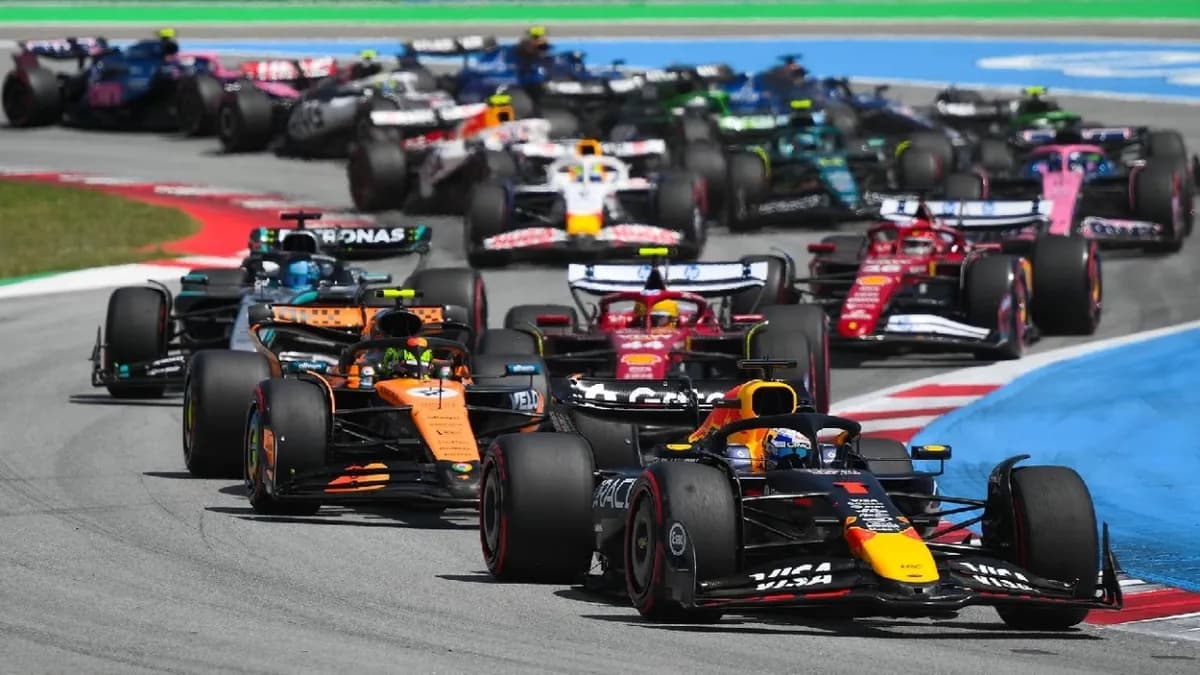
F1 Sponsorship for Brand Awareness, Leads and Sales
By Aneesa Umber
Sep 30 2026, 9 min read
F1 sponsorship can support brand awareness, lead generation and sales, but the outcome depends heavily on how the partnership is structured and activated.
Branding on a car, team kit or other F1 asset can create significant exposure. Generating leads requires giving prospects a reason to interact with the brand. Sales depend on how those interactions connect with the wider customer journey.
This matters when deciding whether Formula 1 is right for your marketing budget.
Formula 1 reported a global fanbase of 827 million in 2025, with 43% of fans under 35. The audience gives sponsors considerable international reach, but reach is only the starting point.
At World Sports Advertising, our motorsport experience includes delivering the SAP GROW campaign around the Miami Grand Prix and work involving the Komatsu and Williams Racing partnership. These campaigns demonstrate how motorsport can support wider media, technology storytelling and commercial objectives beyond initial brand exposure.
Is F1 Sponsorship Mainly for Brand Awareness?
Brand awareness is one of the main reasons companies invest in F1 sponsorship, but the same partnership can support lead generation, customer engagement and wider sales activity when the right activation is in place.
Depending on the agreement, sponsorship rights can include car branding, team assets, digital content, hospitality, driver access, intellectual property and fan experiences.
That gives a brand several opportunities to remain visible throughout a season and across different markets.
There are also signs that F1 fans are receptive to commercial partnerships. Formula 1 reported findings from a global fan survey in which 76% of respondents said sponsors enhance the F1 experience, while one in three said they were more likely to buy from F1 partners.
These figures show audience receptiveness rather than proving that sponsorship directly causes purchases. For brands, the more important question is what happens after somebody encounters the partnership.
Can F1 Sponsorship Generate Leads?
F1 sponsorship can generate leads when the partnership gives prospects a clear opportunity to engage with the brand and that engagement can be captured and followed up.
A logo on an F1 car creates visibility, but it does not tell you which viewers are potential customers.
Lead generation needs an additional interaction.
That could involve:
- Registering for a race week event
- Entering a competition
- Booking a product demonstration
- Downloading relevant content
- Visiting a dedicated campaign page
- Attending corporate hospitality
- Requesting more information
- Meeting the sales team at an event
Consider a B2B software company sponsoring an F1 team. It could invite senior prospects to a private event during a Grand Prix weekend, record attendance against existing CRM accounts and arrange follow up meetings after the race.
The company can then measure how many target accounts attended, how many meetings were secured and whether those relationships developed into commercial opportunities.
That tells the business far more than exposure figures alone.
This is why F1 sponsorship activation needs to be considered alongside the sponsorship rights themselves.
How Can B2B Brands Use F1 Sponsorship?
B2B brands can use F1 sponsorship to engage priority accounts, host customers, meet senior decision makers, create content and give sales teams new opportunities to develop commercial relationships.
This can be particularly relevant for technology, SaaS, financial services, engineering, logistics and professional services companies.
The important part is connecting the sponsorship with the people the business actually wants to reach.
Use Hospitality Around Priority Accounts
Hospitality can have a clear commercial purpose when it is planned with the sales team.
Rather than simply deciding who receives race tickets, brands can identify customers, active prospects and high value target accounts before invitations are sent.
A company might invite ten decision makers from strategic accounts to a Grand Prix weekend. It could arrange an executive dinner before the race, provide hospitality during the event and schedule individual follow ups afterwards.
Measurement can then focus on what happened with those accounts.
Were new meetings secured? Did an existing opportunity progress? Did the experience help strengthen an important customer relationship?
These questions make hospitality easier to evaluate as part of a wider B2B programme.
Turn the Partnership Into Useful Content
F1 can also give B2B companies a more accessible way to communicate what they do.
Technology is deeply embedded in modern motorsport. Teams rely on software, data, connectivity, engineering and communications throughout a race weekend.
A technology partner could therefore use its sponsorship to create technical case studies, executive interviews, product demonstrations, customer presentations or content explaining how its technology operates within a demanding environment.
The connection needs to be credible. Simply placing an unrelated product next to an F1 car is unlikely to explain much about the company.
Our guide to motorsport sponsorship for tech and SaaS brands looks further at how technology businesses can use motorsport for B2B engagement.
Can F1 Sponsorship Generate Sales?
F1 sponsorship can contribute to sales, although the ability to attribute revenue directly depends on the type of brand, activation and customer journey.
Consumer brands may have relatively direct ways to track commercial activity.
An F1 related product launch could use a dedicated landing page, promotional code or ecommerce campaign. The brand can then measure purchases associated with the activation.
B2B attribution is usually more complex.
Imagine a prospect attends an F1 hospitality event in May, books a product demonstration in June and signs a contract in September.
It would be difficult to describe the hospitality event as the sole cause of that sale. It would also be incomplete to ignore its role if the event helped develop the relationship.
B2B brands can therefore look at several levels of commercial impact.
Pipeline generated can show new opportunities originating through sponsorship activity.
Pipeline influence can identify existing opportunities where hospitality, events or sponsorship content contributed to further engagement.
Revenue attributed can be used where there is a sufficiently clear link between an activation and a completed sale.
Defining these measures before the campaign begins reduces the temptation to claim every commercial result as sponsorship revenue afterwards.
How Should F1 Sponsorship Be Measured?
F1 sponsorship should be measured against the objective established before the rights are purchased. There is no single KPI that accurately measures every partnership.
For an awareness focused campaign, useful measures can include reach, brand awareness, brand recall, branded search, website traffic and share of voice.
A lead generation campaign can look at registrations, enquiries, qualified leads, meetings booked and target accounts engaged.
B2B sponsorship may require a different set of measures, including:
- Priority accounts hosted
- Decision makers engaged
- Follow up meetings secured
- Opportunities created
- Account progression
- Pipeline generated
- Pipeline influenced
- Customer retention
- Revenue where attribution is possible
The measurement plan can also affect which sponsorship rights are worth buying.
A B2B company planning to engage senior prospects may place greater value on hospitality and customer experiences. A consumer brand focused on acquisition may need promotional, content and fan activation rights.
This is one reason brands should establish their commercial requirements before buying F1 sponsorship rights. Rights packages can include very different combinations of branding, intellectual property, hospitality, content and B2B opportunities.
How Can Brands Extend an F1 Partnership Beyond the Circuit?
Race week audiences move well beyond the circuit.
They arrive through airports, stay in hotels, travel on major roads and spend time across business, hospitality and entertainment districts in the host city.
This creates opportunities to combine sponsorship with motorsports advertising around commercially important races.
The World Sports Advertising media team used this approach for SAP GROW around the Miami Grand Prix. The campaign included airport arrivals, baggage claim, passenger routes, escalator environments and roadside billboards, reaching business travellers and international visitors as they moved through Miami.
The same principle can be applied according to market priorities.
A brand focused on US growth could increase its activity around Miami, Austin or Las Vegas. A business targeting customers in the Middle East might place greater emphasis on Abu Dhabi, Bahrain or Qatar.
This allows brands to put more activation behind the races that matter most to their commercial strategy.
What Should You Decide Before Investing in F1 Sponsorship?
Before approaching an F1 team, driver or rights holder, define what you need the partnership to achieve.
If awareness is the priority, identify the markets and audiences where stronger recognition matters.
If lead generation is the goal, establish how somebody will move from seeing the sponsorship to making an identifiable action such as registering, enquiring or meeting your team.
B2B brands should identify the customers and target accounts they want to engage and determine whether hospitality, content, events or other sponsorship rights can realistically help develop those relationships.
The budget also needs to account for activation. Buying sponsorship rights gives a brand access to agreed assets, but additional investment may be required for advertising, content, hospitality, events and other activity that makes those rights useful.
Before committing, brands should be able to answer a few practical questions:
- Which audiences and markets matter commercially?
- What should the sponsorship achieve?
- Which rights will the business genuinely use?
- How will people interact with the partnership?
- How will marketing and sales teams use it?
- What will be recorded in the CRM?
- Which results will determine whether the investment worked?
These questions make it easier to assess opportunities based on their usefulness to the business rather than choosing a package primarily for the most prominent branding position.
Build F1 Sponsorship Around Your Commercial Goals
There is no single formula for turning F1 sponsorship into a business result.
A company seeking international recognition will approach the opportunity differently from a SaaS business targeting enterprise buyers or a consumer brand launching a new product.
The important part is knowing what the sponsorship needs to achieve before deciding which team, rights and activation opportunities to invest in.
World Sports Advertising works with brands across Formula 1 sponsorship and wider motorsport sponsorship, with experience spanning sponsorship, activation and race market advertising.
If you are considering Formula 1 and want to understand which opportunities make sense for your audience, markets and commercial objectives, speak to World Sports Advertising about building an F1 sponsorship strategy around what your business actually wants to achieve.