

Darts Audience Demographics and Reach for Sponsors
By Aneesa Umber
Sep 21 2026, 7 min read
Darts has grown into a major spectator sport with strong television audiences, packed live events and an expanding international following. For brands exploring darts sponsorship opportunities, understanding that audience is essential before choosing a player, tournament or advertising asset.
Darts audience demographics cannot be understood through one headline viewing figure. Age, gender, location, viewing behaviour and digital engagement all help build a clearer picture of who follows the sport and where sponsorship can generate relevant exposure.
Who Watches Darts?
The darts audience remains male-led, but its profile changes depending on what is being measured.
YouGov Profiles research published in 2024 found that 9% of Britons followed darts. Among these followers, 76% were male and 24% female. The audience also skewed older, with 45% aged 55 or above and 18% aged between 18 and 34.
These figures describe people who identify as darts followers. They should not be treated as the demographic profile of everyone who watches a major tournament.
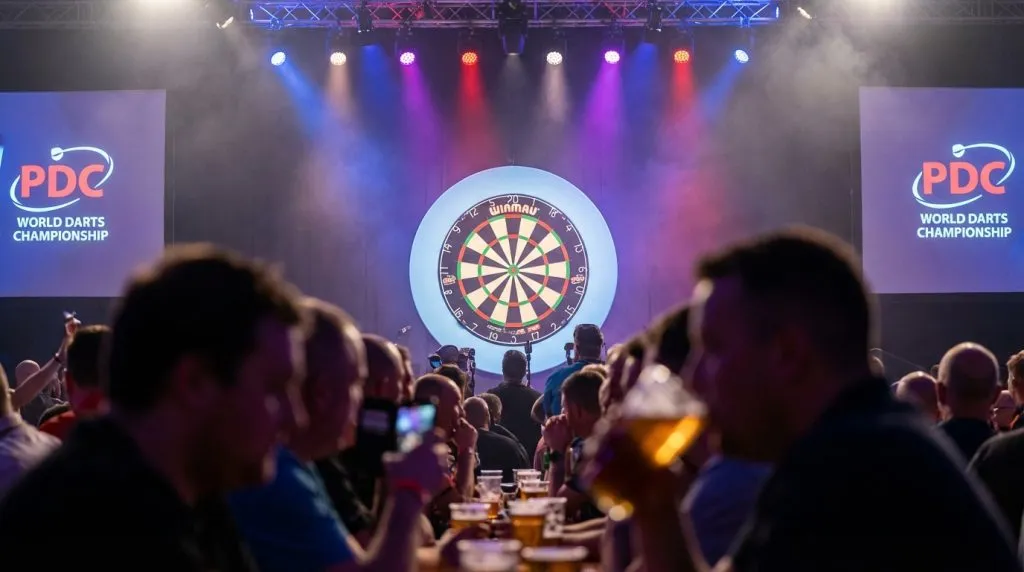
That distinction matters because major events can attract audiences beyond regular followers. The PDC World Darts Championship provides a particularly important stage for brands because exposure can extend across the live venue, broadcast coverage and digital activity. Brands considering this specific event can explore PDC World Darts Championship sponsorship opportunities including arena LED boards and player sponsorship.
For sponsors, the difference between the core fan and the event audience matters. A brand associated with a major tournament can potentially reach regular followers alongside occasional viewers drawn to high-profile matches and players.
A Growing Live Audience
Darts also reaches audiences away from television.
Major tournaments create an environment where spectators spend extended periods around the competition. This gives brands the opportunity to become part of the live experience through assets such as arena advertising, player partnerships and tournament sponsorship.
The type of exposure is different from broadcast. Television provides scale across markets, while spectators inside the venue encounter sponsorship directly around the stage, players and wider event environment.
For sponsors, these audiences should be measured separately. Broadcast reach shows how many viewers a competition can potentially reach, while attendance data indicates the scale of the physical audience experiencing the event.
Darts Audiences Extend Across Digital Channels
The modern darts audience also extends beyond television and the venue. Highlights, player content, interviews and tournament moments continue across social platforms throughout major competitions.
This creates additional opportunities for sponsorship exposure. A prominent moment during a match can continue circulating through highlights, short-form video and social coverage after the original broadcast has finished.
Digital audiences therefore add another layer to campaign measurement. Relevant indicators can include video views, impressions, engagement and branded-content performance.
Which Markets Are Strongest for Darts?
Professional darts has developed an international footprint, but audience strength differs significantly by country.
For sponsors, the number of territories where darts is available is less useful than understanding where the sport has established broadcast audiences, live events and active fan communities.
United Kingdom
The UK remains a central market for professional darts, combining established television coverage with a substantial calendar of live competition.
The PDC World Darts Championship at Alexandra Palace is the sport's flagship event, while Premier League Darts brings professional competition to major cities around the country. Other established events add further opportunities for brands to maintain a presence across the season.
For companies targeting British consumers, this combination of broadcast coverage and live events creates several potential audience touchpoints.
Germany
Germany has become an important European market for professional darts, supported by television coverage and an established calendar of PDC events.
Major tournaments and European Tour events give German audiences opportunities to follow the sport both through broadcast coverage and in person.
For sponsors targeting the UK and continental Europe, Germany should therefore be assessed as its own market. Local viewing figures, attendance and fan engagement can provide a clearer indication of its relevance to a particular campaign.
The Netherlands
The Netherlands has a long-established relationship with professional darts and remains another important European market.
Dutch players have maintained a strong presence across major competitions, while events in the Netherlands provide local fans with regular opportunities to experience professional darts.
The market illustrates why darts audience reach should be considered through several factors. Player recognition, tournament presence, broadcast distribution and local fan interest can all influence the strength of a sponsorship opportunity.
Darts Has a Wider International Footprint
Beyond its established European markets, professional darts reaches audiences across other parts of Europe, North America and Asia-Pacific.
An increasingly international player pool also creates connections between major competitions and audiences in a broader range of countries.
However, international availability does not mean audience strength is equal in every market. A country where a tournament is available to watch may have a very different level of interest from an established darts market.
Brands planning international activity should therefore examine each priority market individually rather than treating the global darts audience as a single group.
What Audience Data Matters to Sponsors?
Headline viewing figures are useful, but they should be the starting point of sponsorship analysis.
The strongest assessment brings together several audience signals to understand who can be reached, where they are located and how they interact with the sport.
Reach and Viewing Figures
Broadcast reach establishes the potential scale of a sponsorship.
Peak audiences show the size of major sporting moments. Average audiences and total viewing time provide a different perspective by showing how interest is sustained across a tournament.
This matters for assets that appear repeatedly throughout a competition. Arena LED boards, stage branding and player shirts can potentially receive exposure across multiple matches and sessions rather than during one isolated moment.
Age and Gender
Age and gender help sponsors establish whether the people following the sport align with their target customer.
Available research also demonstrates why the source of demographic data needs to be clear. Research measuring people who actively identify as darts followers may produce a different profile from data measuring viewers of a specific tournament.
Sponsors should therefore establish who was measured, when the research was conducted and which market it represents before using demographic figures to guide investment.
Geographic Reach
Geography becomes particularly important for brands operating across several markets.
A UK focused campaign may place greater weight on British broadcast audiences and domestic events. A European campaign may also examine Germany, the Netherlands and other established darts territories.
The relevant question is not simply how widely darts is distributed. Brands need to understand how large and engaged the audience is within the markets that matter to them.
Live Attendance
Attendance data provides another measure of audience scale.
Fans inside the venue experience sponsorship differently from viewers watching remotely. Depending on the rights secured, brands can appear around the stage, across player clothing, within hospitality areas or through fan-facing activity.
This makes live attendance particularly relevant when evaluating tournament and darts advertising opportunities built around the physical event.
Digital Engagement
Social and digital performance can show how far interest travels beyond the live broadcast.
Video views, impressions, interactions and branded-content engagement can help sponsors understand how audiences respond to tournament and player content online.
These metrics should remain distinct. A social impression, video view, television viewer and live spectator represent different forms of audience contact. Combining them into one figure can give an unclear picture of actual reach.
Frequency and Visibility
Audience size also needs to be considered alongside how often sponsorship is visible.
A brand appearing throughout several tournament sessions has a different exposure pattern from one attached to a single event or piece of content. Broadcast duration, logo position, number of matches, tournament length and digital amplification can all influence frequency.
Brands can explore our guide to measuring darts sponsorship ROI for a closer look at broadcast exposure, sponsor recall, digital engagement and other relevant performance measures.
What Does the Darts Audience Mean for Sponsors?
The opportunity around darts comes from the combination of broadcast audiences, live events, established European markets and digital engagement.
Recent audience evidence also shows why sponsors need to look beyond traditional assumptions about darts fans. The people watching a major tournament are not necessarily identical to those who identify as regular followers of the sport.
For brands considering darts sponsorship, the stronger approach is to assess viewing figures, demographic profile, geography, live attendance, digital engagement and frequency together. Each metric answers a different question about potential exposure.
This audience led approach can help brands determine where darts fits within a wider sports strategy before deciding which player, tournament or advertising asset to pursue. World Sports Advertising also works across a broader range of sports advertising opportunities for brands considering campaigns beyond darts.